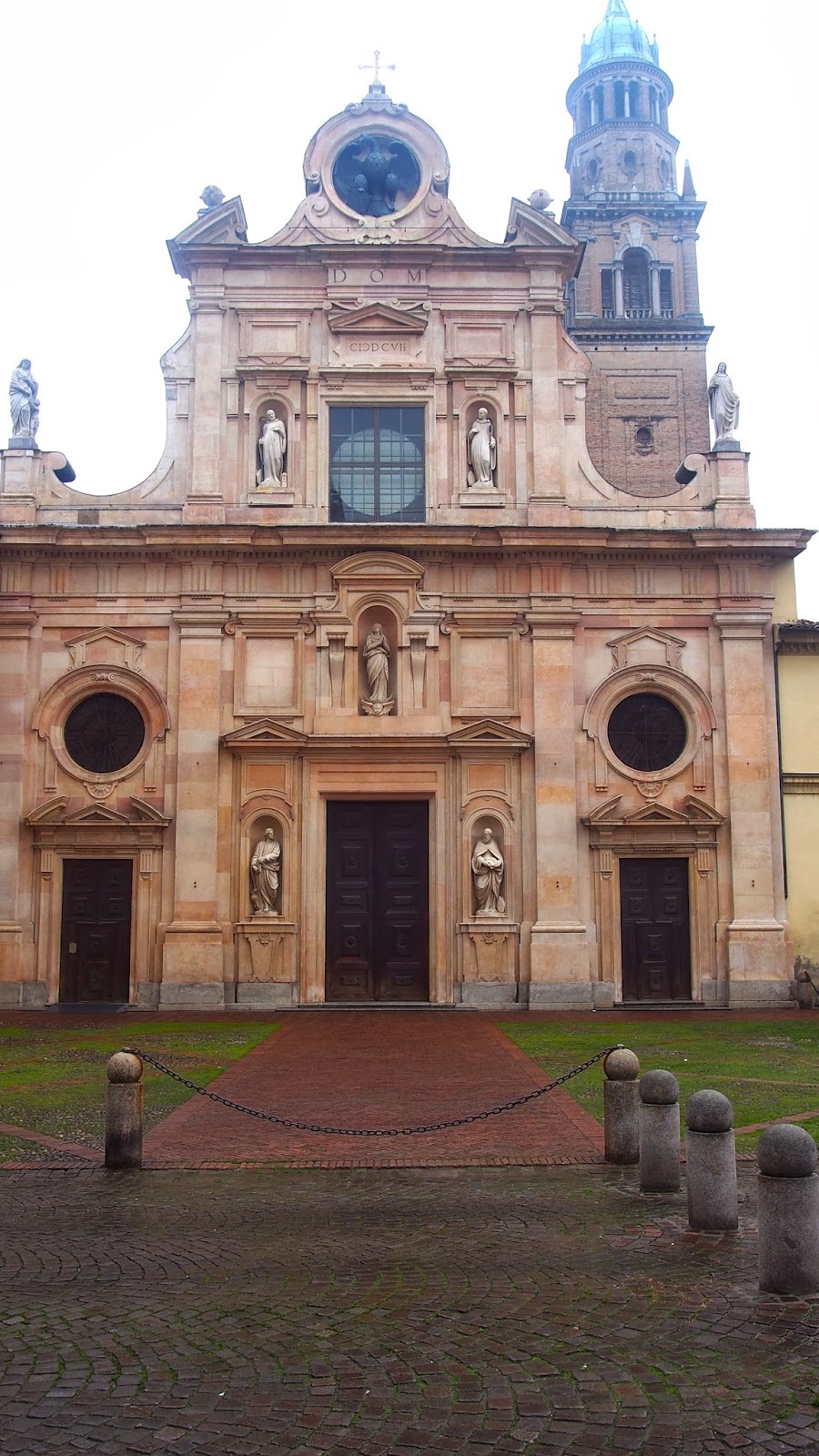
I Tried Venice Again And I Still Didn't Like It
After I visited Venice in September, I thought perhaps I was a bit too harsh in what I said about it. It is a gorgeous Italian city, after all; full of history and fantastic scenery and charming buildings. Maybe I was too mean when I called it the Wisconsin Dells of Italy.


So, when my family was here last week, I decided to give Venice another chance. After all, it is one of those bucket list things - it's cool to be able to say you've seen Venice. I thought we might regret not stopping by... we were in the area, after all.

So, Milan got the short end of the stick (one rainy evening and a few hours the following morning) so that we could spend the majority of the day in Venice. We arrived around 2pm and had tickets back to Milan booked for 8pm. This was about the same amount of time I had there on my first visit.
To refresh, what irked me about Venice the first time was how fake it seemed. The massive influx of tourists on a daily basis has forced Venice to adapt; thus, 90% of stores, restaurants, and sights on the tiny island cater towards an international audience at the cost of their Italian authenticity. Food is overpriced and souvenirs are mass produced. None of this was any different the second time around.


Another major negative to Venice are the crowds. My first visit was in late September, near the end of the summer/fall tourist rush. Even then, it was freakishly crowded. The second time around, it was late December - also a busy tourist time, and there were even more people packed into Venice's narrow streets than before.
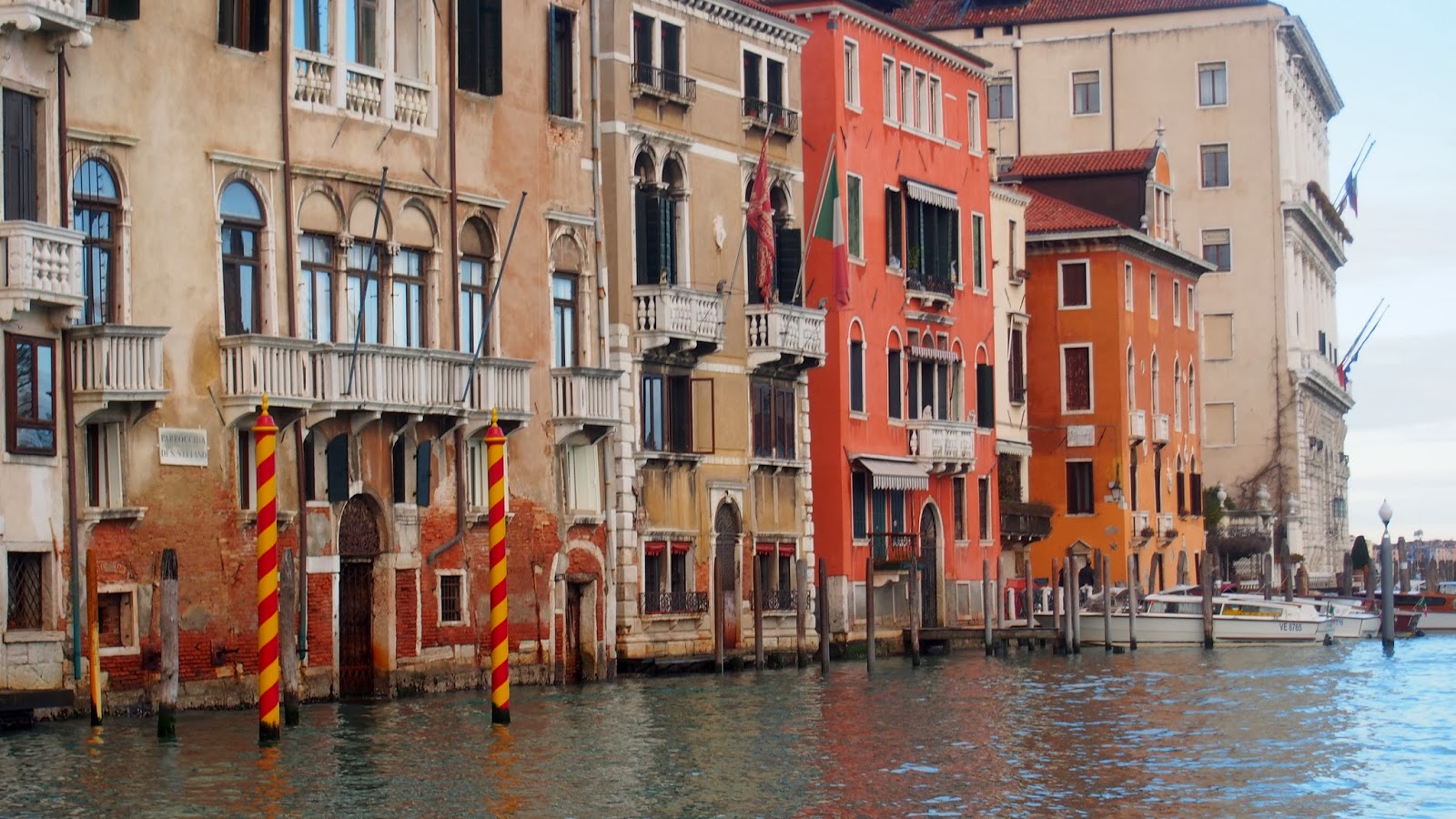
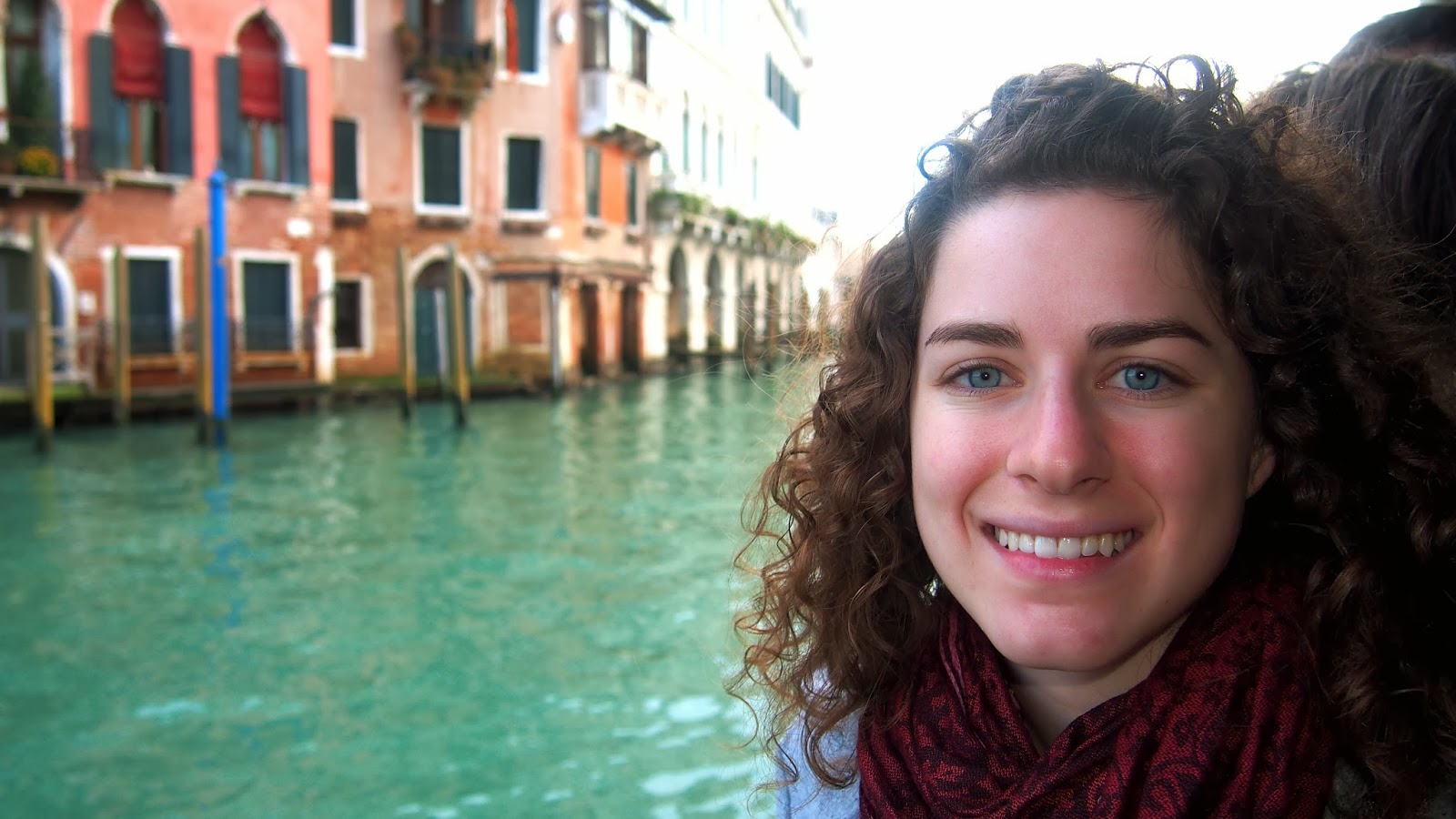
Nevertheless, we plodded through the crowds and hopped on a water bus, which my mother likened to cattle being herded into a pen. Really, there was not an open space on that boat. The boat took us down the Grand Canal, which after trudging through the streets of Venice a few times now, I'd have to say is the way to go. You'll be able to see Venice's charm and beauty without the stress and confusion of navigating the hundreds of twisting alleys by foot. If I ever return, I think I'll just ride around on water busses all day and venture onto dry land only for food. Another perk of the water busses; the price. Venice is known for its gondola rides, which cost upwards of 80 Euros per hour. A water bus gives you more or less the same views of Venice - albeit with a few strangers along for the ride - but at a much lower price; 5 Euros for an hours' worth of bus transfers. You can also get a day long or 3 day long pass - each of which are still cheaper than one hour on a gondola.



We boated to Piazza San Marco with the thought that we could then spend the remaining time ambling back to the train station. The first time I visited, I would have loved to climb the tower in Piazza San Marco, enter the Dodge's Palace, and go into the Basilica of San Marco, but the massive crowds pretty much ensured that those things would only be accomplished if I stood in line for the remainder of my twenties. This time was no different; the line to climb the tower stretched back ridiculously far, as did the line to enter the Dodge's Palace. The entrance to the basilica was quite crowded as well, but we squeezed in for a quick look.


I didn't know quite what to expect, given the exterior's very Byzantine look, but whatever I thought the interior would look like, it certainly wasn't pure gold. Nearly every surface of the inside was covered in gold and mosaics - it was all very stunning.


A quick panini and gelato later, we began the confusing task of getting back to the train station. Venice's streets are utterly infuriating - at least for me. I'm pretty sure the rest of my family was getting a bit annoyed as well, whether it was with my inability to properly navigate, or the disorienting state of the streets themselves. Probably a bit of both. In any case, if you plan to visit Venice, I suggest actually studying the map beforehand, and using whatever sort of GPS feature you might have on your phone. You can try to follow the signs on buildings, which will direct you a certain way for a sight. The problem is, however, that with such twisting streets, there are about a hundred and one ways to get to any given place, and the signs tend to lead you around in circles a few times before you actually reach your destination.
After wandering around somewhat aimlessly among the hordes of people for the better part of 4 hours, we were all ready for a rest and some dinner. Now, I'm sure there is a beautiful, delicious, reasonably priced gem of a restaurant tucked away somewhere in Venice - somewhere that only the locals are aware of. We did not eat at that mystical, unknown place.
Rather, a waiter took advantage of our exhausted, slightly perturbed state and lured us into his... er... fine establishment. Imagine one of those Party City stores in the U.S. that sell cheap, flimsy decorations for any sort of themed party you can think of. Now imagine you're walking down the Italy aisle of that store, and that will give you a spot-on idea of the interior of the restaurant we ate at. At that point, it was all we could do to just embrace the metallic silver streamers hanging from the ceiling and cardboard palm tree cutouts on the wall.
Like in my last post about Venice, I do have to give it some credit. I think everyone agreed that it's a very charming city, and at the very least, it's clear why so many people flock there. The buildings are full of character and the canals make everything utterly picturesque. Given enough time and patience, I'm sure the historic sights and museums are well-worth a visit, too. And, though overpriced, the food is certainly delicious.


If you have been to Venice and loved it, I am envious of your ability to do so. If you are planning to go at some point, don't listen to my cynical opinion because it really is just that - an opinion. I want to love Venice, and I want others who go there to love Venice. So here are my suggestions: give yourself two days and one night to allow for a more relaxed visit and plenty of time to accidently get lost (it will happen). Also, avoid visiting from May-October and over the holiday (end of December-beginning of January). Like most of Italy, Venice should be quieter and far less busy around November/early December, and late January to April. I really think that fewer crowds would make a big difference in the experience. Finally, understand that you're getting a manufactured Italian experience, not necessarily a real one. That doesn't make it bad, it just makes it... like the Disneyland of Italy. There, that's less harsh than comparing it to Wisconsin Dells, right?

Labels: boat, cathedral, experiences, gelato, Italy, northern Italy, opinions, tourism, Venice
posted by Unknown @ Wednesday, January 08, 2014
0 Comments